Let’s work together
I design scalable platforms and streamline infrastructure so your team can move faster, safer, and smarter.

© 2026 Raditya Surya. All rights reserved.
I design scalable platforms and streamline infrastructure so your team can move faster, safer, and smarter.
© 2026 Raditya Surya. All rights reserved.
Exploring the balance between enterprise-grade tools at work and a more relaxed, experimental setup at home with Docker, Coolify, and Unraid.
At work, I mostly work with the cloud. Most of my day is spent in AWS, managing EKS (Kubernetes), deploying Helm charts, maintaining RDS clusters and wiring everything together so production systems are stable and scalable. It is rewarding, but also heavy. Every tweak carries weight because downtime and mistakes affect real people and real money.
But when I come home, I do not want my homelab to feel like a clone of AWS or production. I am not here to rebuild the enterprise stack in my living room. Instead, I aim for something I call semi-industrial tech. It is not consumer-level simple, but it is also not cloud-scale enterprise. It sits in the middle, where I can still experiment and learn without carrying the stress of uptime and SLAs into my evening.
I tried it once. I spun up Kubernetes on my homelab thinking, "This will be good practice!" And it was, for a while. Then I found myself debugging pods, fiddling with ingress controllers, setting up storage classes, and basically recreating my workday.
That was the moment I realized that at home, I do not want Kubernetes. I want something lighter. Docker and Coolify give me exactly that. They let me launch apps in minutes, break things without guilt, and move on without spending hours digging through logs.
Most of my homelab runs on Docker or Coolify. Docker is my go-to for quick containers, while Coolify gives me a PaaS-like experience without the overhead of Kubernetes. It is perfect when I want to deploy something small, test a new stack, or spin up a personal project.
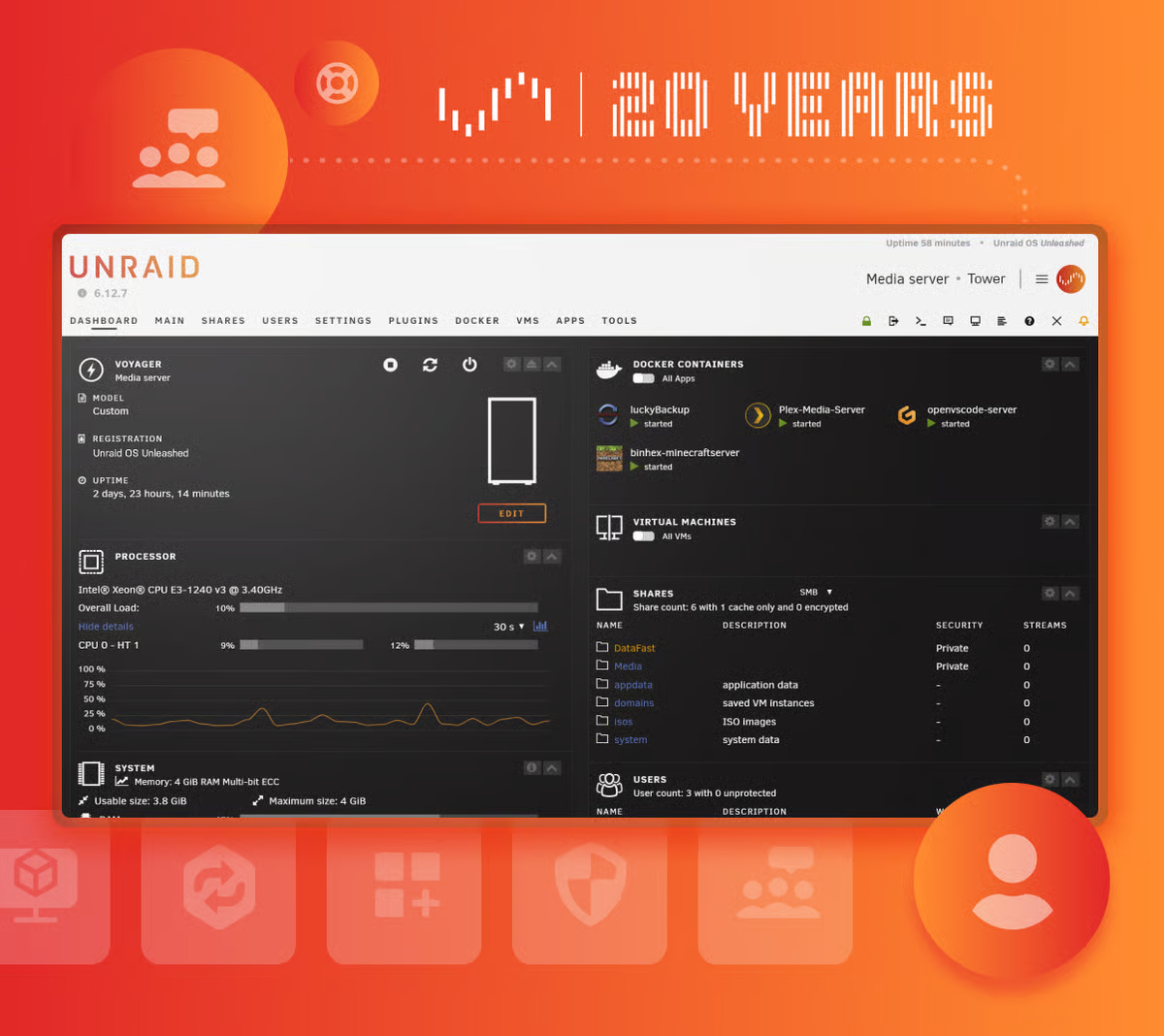
Then there is Unraid, which is really the backbone of everything at home. I use it both as my NAS and as my home server. It stores my files, handles backups, and runs the containers that power my setup. I like that it is industrial enough to host multiple workloads, but not so complicated that I am stuck writing endless YAML just to keep a media server running.
At work, Helm is essential. It makes complex deployments reproducible and keeps large workloads manageable.
At home, Helm feels like swinging a sledgehammer at a nail. If I want to test a wiki or run an app I found on GitHub, it is faster to use docker-compose or Coolify. Rolling updates, versioned charts, and templated values are not necessary for one-person experiments. If something breaks, I stop the container and restart it. Done.
At work, logging and monitoring are critical. We rely on tools like Datadog, Prometheus, and Grafana to track everything in real time. Dashboards, alerts, and traces are necessary to keep production systems reliable.
In my homelab, I keep it simple. I do not run Datadog or Prometheus at home. I do not need complex metrics or distributed tracing for a media server or a small personal project. Most of the time, I just check container logs directly or set up lightweight logging that is good enough. If something crashes, I can fix it on the spot. No dashboards required, no alerts waking me up in the middle of the night.

It is the same with databases. On AWS, I set up RDS clusters with multi-AZ replication, automated backups, monitoring, and failover. That is the right move when uptime matters.
In my homelab, if Postgres dies, I simply rebuild it. No failover, no replicas, and no alarms at three in the morning. It feels freeing. It reminds me that not every setup needs enterprise-grade resiliency to be useful.
That is why I call my homelab semi-industrial tech.
It is industrial enough that I am still working with real tools and workflows. It is casual enough that I do not feel like I am clocked in when I am tinkering.
It gives me a chance to practice, experiment, and play with tools outside of the AWS ecosystem too. Sometimes I learn things that make me better at work. Other times I just enjoy building without the overhead. Either way, it keeps the joy alive.
Work teaches me discipline, scalability, and best practices. My homelab gives me freedom, curiosity, and the ability to break things without worrying about customers or KPIs.
When I come home, I do not want my homelab to feel like a second job. I want it to be my semi-industrial playground. A space that is serious enough to be interesting, and relaxed enough to stay fun.